
Hepatology
Focused Expertise in Liver Health, Disease Management, and Regenerative Care
Hepatology is a subspecialty of gastroenterology that deals specifically with the liver, gallbladder, biliary tree, and pancreas. It focuses on the prevention, diagnosis, and management of diseases affecting these organs. At CLRD, under the leadership of Dr. Aejaz Habeeb, hepatology services combine advanced diagnostics, evidence-based treatments, and regenerative medicine to deliver comprehensive care for complex liver conditions.
Key Areas of Focus
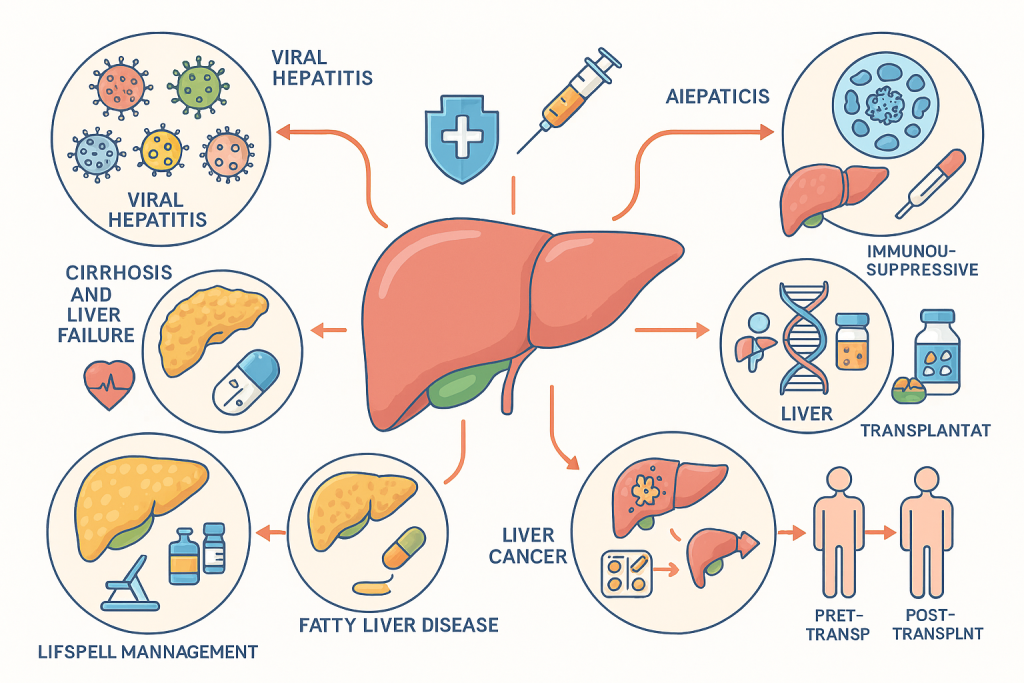
CLRD provides specialized care for a wide spectrum of liver disorders. The team manages all forms of viral hepatitis, including Hepatitis A, B, C, D, and E, through comprehensive antiviral therapy and preventive vaccination strategies. Patients with cirrhosis and liver failure receive advanced medical management, nutritional support, and interventional therapies aimed at stabilizing and improving liver function. For those with fatty liver disease, including NAFLD and NASH, CLRD offers structured lifestyle modification programs combined with pharmacological interventions to address metabolic imbalances. Liver cancer, particularly hepatocellular carcinoma, is treated through a multimodal approach that includes loco-regional therapies, systemic treatments, and transplant evaluation. The center also provides complete pre- and post-transplant care for liver transplantation candidates, ensuring optimal outcomes. Autoimmune liver diseases are managed with targeted immunomodulatory therapies, while genetic liver disorders such as Wilson’s disease and hemochromatosis are addressed through genetic screening, chelation therapy, and long-term monitoring.
Advanced Interventions and Diagnostic Excellence
CLRD integrates cutting-edge diagnostic tools and interventional procedures to ensure precision in disease detection and management. Liver biopsy remains a cornerstone for histopathological confirmation of complex liver conditions, while non-invasive techniques such as FibroScan (transient elastography) provide accurate assessment of liver stiffness and fibrosis staging. The center offers comprehensive management of portal hypertension, including endoscopic and pharmacological interventions to prevent variceal bleeding. For patients requiring transplantation, CLRD provides thorough evaluation protocols and meticulous post-transplant care. In addition, the center is a pioneer in stem cell therapy for liver regeneration, offering innovative solutions for patients with chronic and acute liver failure.
CLRD’s Capability in Diagnosis and Treatment
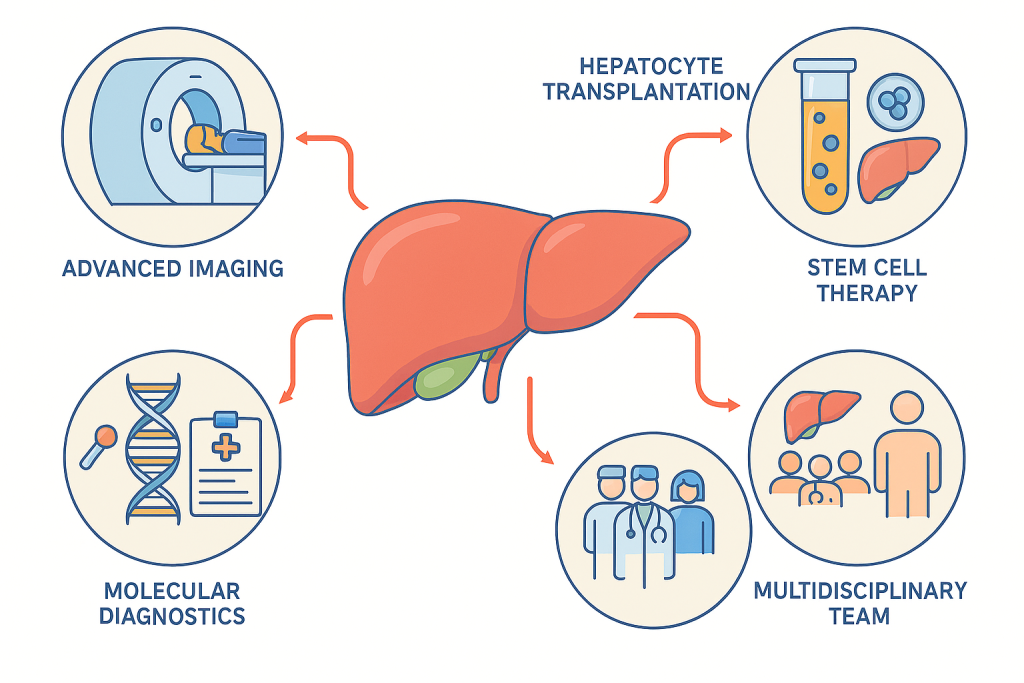
With decades of research and clinical expertise, CLRD has established itself as a leader in hepatology care. The diagnostic arm employs advanced imaging, molecular diagnostics, and immunological profiling to detect liver diseases at the earliest stage. Treatment protocols are personalized, evidence-based, and supported by a multidisciplinary team approach. Dr. Aejaz Habeeb’s pioneering work in hepatocyte transplantation and stem cell therapy has positioned CLRD as a global reference point for regenerative hepatology, offering hope to patients who previously had limited treatment options.
Regenerative Care and Stem Cell Therapy
CLRD is at the forefront of regenerative medicine for liver diseases. Building on extensive research in stem cell biology, the center offers autologous bone marrow stem cell infusion to enhance liver regeneration in chronic liver failure. Hepatic progenitor cell transplantation is employed for conditions such as Crigler-Najjar syndrome and metabolic liver disorders, while bioartificial liver support systems act as a bridge to transplantation or recovery in acute liver failure. These therapies have demonstrated significant improvements in liver function, reducing the need for full organ transplantation and improving patient survival rates.
Patient Outcomes
Patient outcomes at CLRD reflect the success of its integrated approach to hepatology care. Individuals with chronic liver disease who undergo stem cell therapy have shown measurable improvements in liver function tests, reduced ascites, and enhanced quality of life within months of treatment. Patients with acute liver failure supported by bioartificial liver systems have experienced stabilization of critical parameters, allowing time for recovery or successful transplantation. Long-term follow-up of transplant recipients demonstrates excellent graft survival rates and minimal complications due to rigorous post-transplant care protocols. These results underscore CLRD’s commitment to delivering not only advanced treatments but also tangible improvements in patient health and longevity.
Why Choose CLRD for Hepatology Care
CLRD stands out for its expert leadership, comprehensive services, and innovation-driven approach. Under Dr. Aejaz Habeeb’s guidance, the center combines preventive care, advanced interventions, and regenerative strategies to deliver world-class hepatology care. Every treatment plan is personalized, ensuring that patients receive holistic, patient-centric care supported by the latest medical advancements.